






Project Name: Multi-Cavity In-Mold Closing Tethered Closure — Advanced Manufacturing for Enhanced Flexible Packaging Efficiency
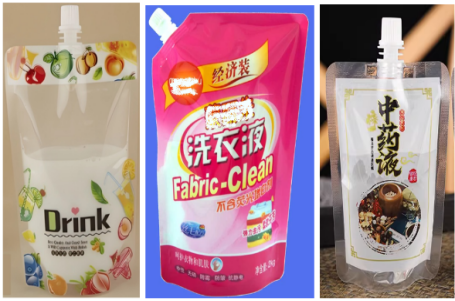
Applications: Tethered closures for stand-up pouches used in pharmaceutical liquids, beverages, laundry detergents, and other liquid products.
 一、Project Overview
As a long-term manufacturing partner to a global leader in drug delivery and consumer packaging solutions, we leverage our core capabilities in technology, innovation, and manufacturing to address three widely recognized production challenges: complex part structures, limited production capacity, and extended lead times.
This case demonstrates how our integrated solution—combining innovative mold design, precision component machining, optimized injection molding processes, and intelligent quality control—helped the customer progress from trial tooling to a 48-cavity mass-production mold within three years, achieving a daily output of over 300,000 parts and an OEE of 89.3%, setting a benchmark for the industry.
II. Customer Requirements & Industry Challenges
In 2023, the customer planned to develop a tethered closure for stand-up pouches. From the early development stage, we worked closely with the customer's marketing and technical teams and identified three key challenges:
| Key Challenge | Description | Industry Challenge |
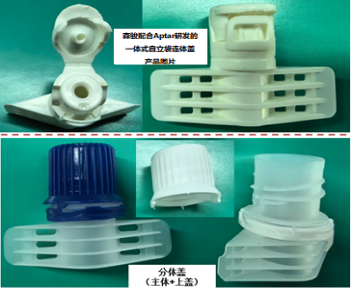
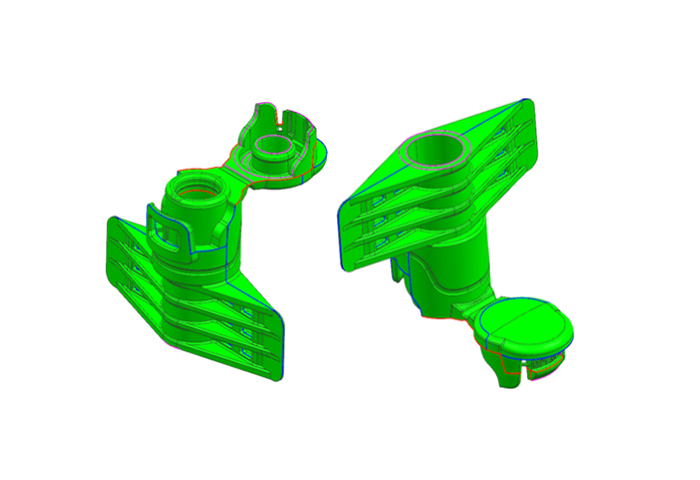
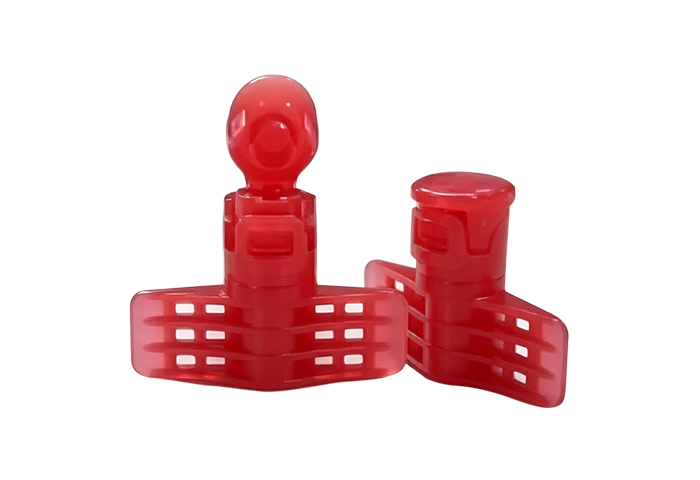
| Complex Mold Structure | A two-piece closure requires two molds and two assembly systems, resulting in low efficiency. A tethered closure can improve efficiency by 50%, but the side grooves on the main body require dual-side slide demolding, which interferes with the upper cap structure. | Conventional molds cannot achieve in-mold closing |
| Cavity Count Reduced by Half | In-mold closing requires four slides for demolding each product, reducing a conventional 48-cavity mold on a 350-ton injection molding machine to 24 cavities. | Production capacity is cut in half |
| Extended Molding Cycle | Four-stage ejection and complex cooling-channel layout were expected to extend the cycle time beyond 17 seconds. | 42% longer than the customer's target of 12 seconds |
 III. Technical Challenge Analysis
| Requirement | Technical Requirement | Industry Challenge |
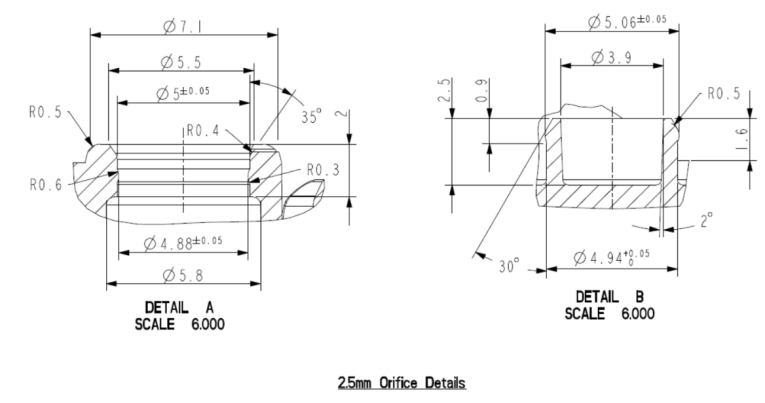
| Critical Dimensions Cpk>1.33 | Φ5+/-0.05mm Φ4.88+/-0.05mm Φ5.06+/-0.05mm Φ4.94+0.05/0mm | Maintaining dimensional stability within 0.05 mm in PE is extremely challenging, and achieving Cpk>1.33 across all 48 cavities represents a top-tier precision injection molding requirement |
| Leak-Free Sealing | 100% pass rate in leakage testing | Pinch marks or flash at the sealing area must be controlled within 0.05 mm |
| Daily Output >300,000 Pieces | 48-cavity mold with molding cycle ≤12 seconds | Conventional industry molds typically use only 24 cavities with a 17-second molding cycle, requiring an exceptionally efficient cooling design |
 IV. Intelligent Manufacturing Solution
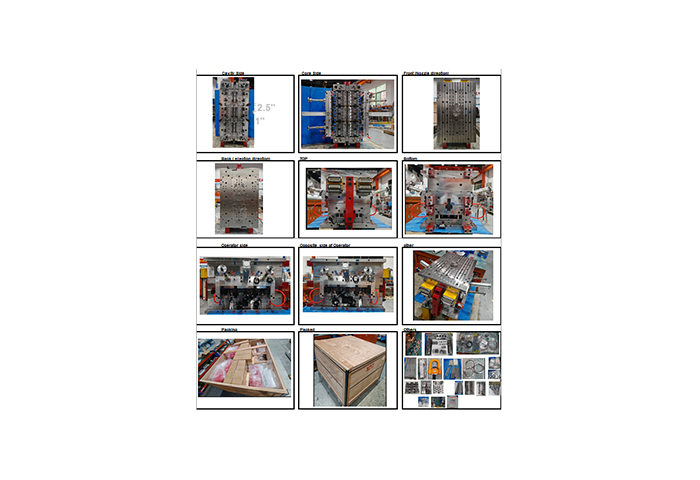
In 2023, we delivered a 4-cavity trial mold to support the customer’s small-batch trial production, validation, and market promotion.
In 2025, we delivered a 24-cavity mold to meet the customer’s supply requirements during the product launch and ramp-up stage.
In 2026, we delivered a 48-cavity mold to support the customer in establishing a leading position in this product category.
1 Critical Product Dimensions Cpk>1.33
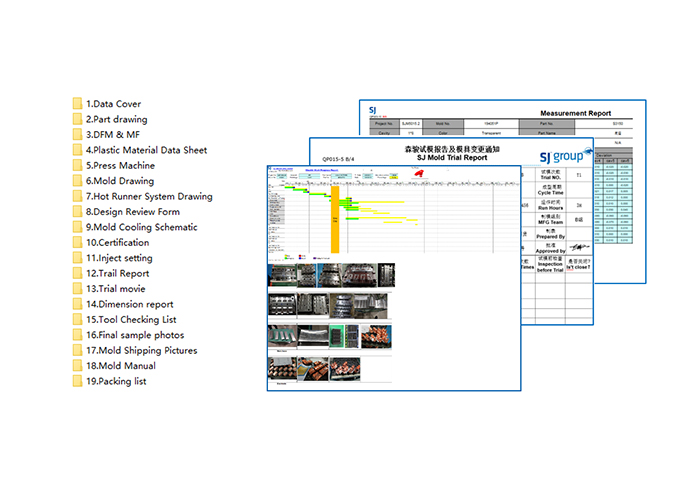
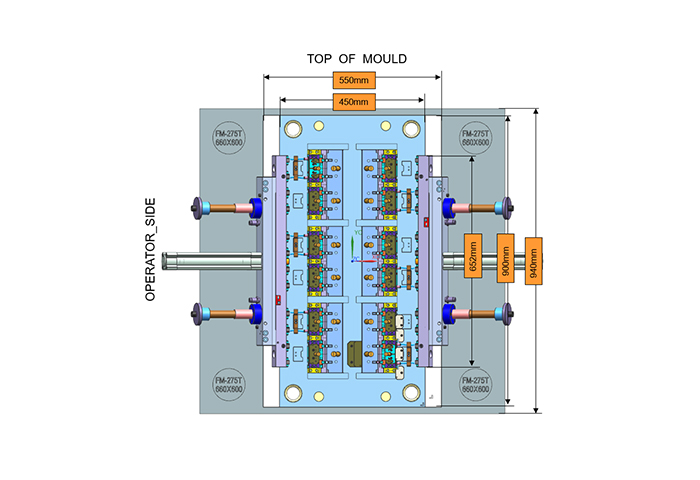
The steel is controlled to an ultra-high precision of 5 μm, with dimensional pre-compensation applied in advance to tighten tolerances to within ±0.02mm / +0.02/0mm respectively. The 4-cavity trial mold and the 24-cavity production mold adopt the same design and structure, including gating, ejection, and in-mold closing. Data validated through the trial mold is used to guide direct machining of the steel for the 24-cavity mold. The delivery cycle was reduced from over 150 days to 120 days, while ensuring Cpk>1.33 for all critical dimensions across all 24 cavities.
2 Leak-Free Spout After Closing
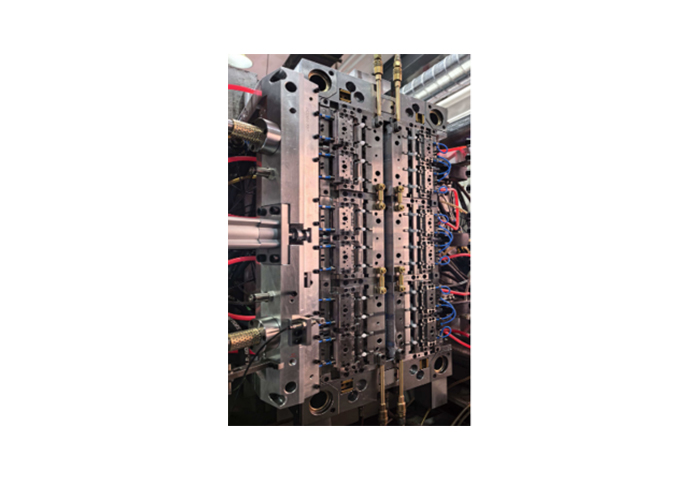
The 24-cavity mold uses a full hot-runner valve-gate system to ensure uniform filling of the products. High-hardness stainless steel is selected as the mold material to significantly improve insert dimensional accuracy while providing excellent demolding performance, preventing scratches or deformation during demolding.
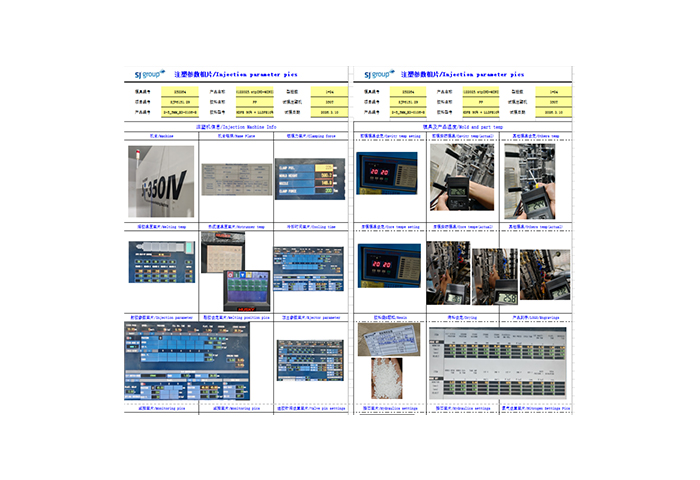
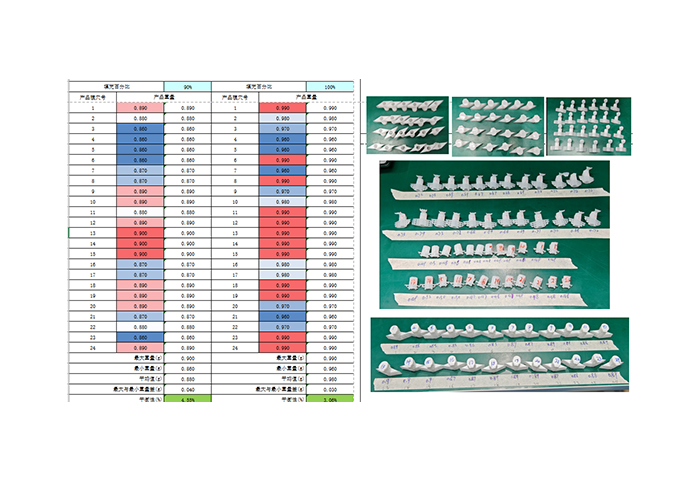
Through scientific mold trials, the injection molding parameters were optimized to identify the optimal processing window. Product weight is controlled at 0.97+/-0.01g, with a filling balance of 3.06% across the 24 cavities. During 8 hours of continuous mold operation, samples were taken every 15 minutes to test sealing performance after closing, and 100% of the products passed the leak-free test.
3 Daily Output >300,000 Pieces
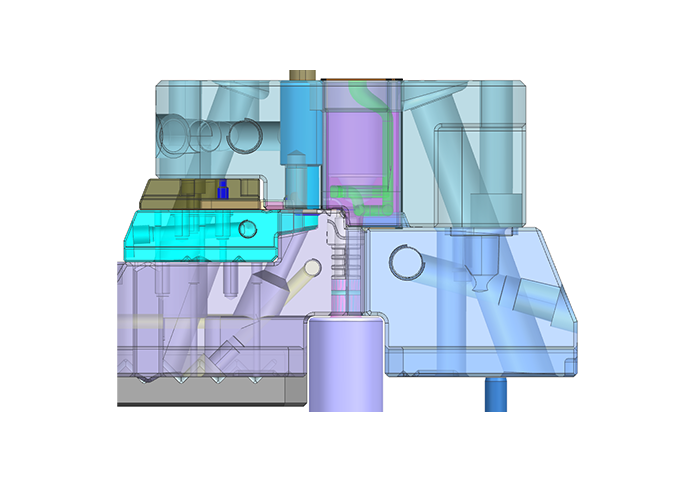
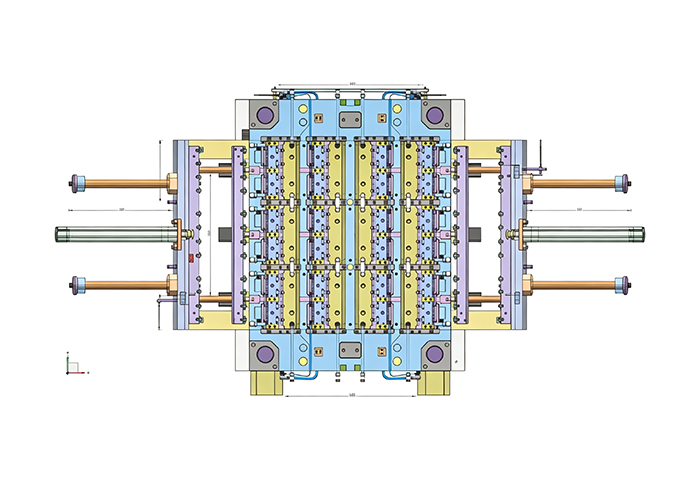
An optimized and innovative cooling design combining conventional cooling channels + 3D-printed cooling channels + high-thermal-conductivity cooling rods embedded in the cooling channels (Figure 11) achieves an ultra-fast cooling time of 4 seconds versus the industry benchmark of 8 seconds. The 48-cavity mold project launched in May 2026 will reduce the molding cycle from 13 seconds, achieved by the 24-cavity mold delivered last year, to 12 seconds, with a performance rate of 98%, yield rate of 97%, equipment availability of 94%, and Overall Equipment Effectiveness (OEE) reaching 89.3%. This significantly exceeds the commonly recognized world-class manufacturing benchmark of 85% OEE, ensuring that a single 48-cavity mold can produce more than 300,000 qualified parts per day.
 V. Project Results Summary
| Original Customer Challenges | Our Solution | Final Results |
| Complex structure, making in-mold closing impossible | Innovative slide + hinge design with four-stage ejection for in-mold closing | Integrated injection molding of tethered closures achieved, improving efficiency by 50%+ |
| Cavity count reduced by half | Precision machining + optimized cooling, with all parameters meeting requirements across 48 cavities | Daily output per mold >300,000 pieces |
| Cycle time exceeding 17 seconds | 3D-printed cooling channels + high-thermal-conductivity cooling rods | Cycle time ≤12 seconds, with cooling time reduced to just 4 seconds |
| Unstable dimensional accuracy | 5μm steel precision control + pre-compensation + trial mold validation | Cpk > 1.33 for 6 critical dimensions |
| Risk of seal leakage | Full hot-runner system + scientific injection molding + 8-hour continuous validation | 100% pass rate in leakage testing |
| Low overall equipment effectiveness | Integrated four-in-one technology solution | OEE 89.3%, well above the industry standard |
VI. Key Advantages
From a 4-cavity trial mold for product development to a 48-cavity mass-production mold, and from a molding cycle of over 17 seconds reduced by 29.4% to 12 seconds with OEE≥89.3%, we helped the customer develop a flagship product that leads the industry within three years.
If you are also facing packaging manufacturing challenges involving high precision, high efficiency, and complex structures, we welcome you to partner with Senjun Intelligent Manufacturing to explore the possibilities of next-generation intelligent manufacturing together.